Tennessee Enacts Immediate Ban on Sweepstakes Casinos via Signed Legislation
Blake Vogel · May 23, 2026

Tennessee Enacts Immediate Ban on Sweepstakes Casinos via Signed Legislation
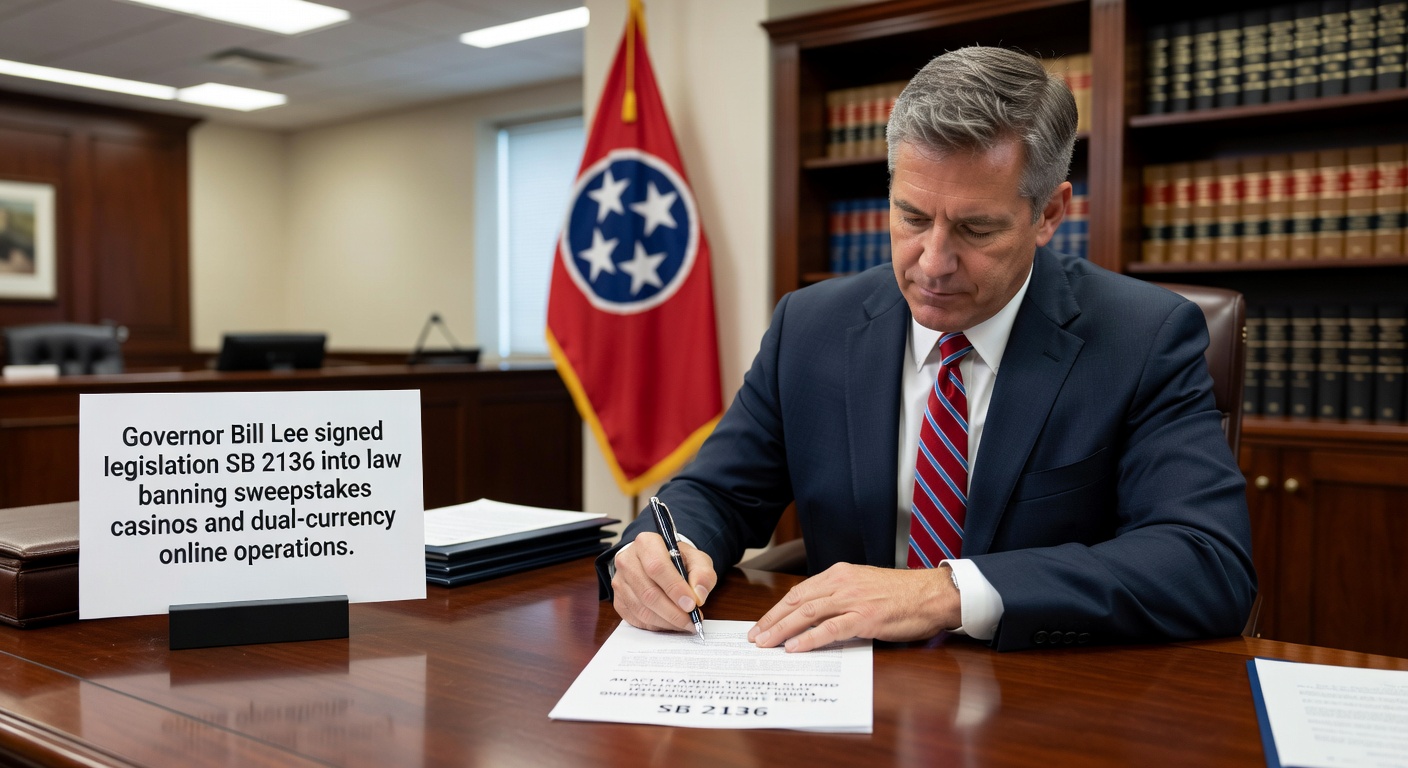
Governor Bill Lee signed SB 2136 into law, which bans sweepstakes casinos operating through dual-currency models across Tennessee, and the measure amends the state Consumer Protection Act while taking effect right away to address illegal online gambling operations. Lawmakers advanced the bill through both chambers before the governor affixed his signature, creating new restrictions that target sites using virtual currencies alongside sweepstakes entries to offer casino-style games. Observers note the legislation closes a regulatory gap that allowed such platforms to function without traditional licensing, and state officials expect enforcement actions to begin promptly under existing consumer protection frameworks.
Details of the Legislation and Its Provisions
SB 2136 specifically prohibits dual-currency sweepstakes operations where users purchase one form of currency for gameplay while receiving another through promotions or entries, a structure that has drawn scrutiny from regulators in multiple states. The amendments to the Consumer Protection Act introduce civil penalties for operators and platforms that facilitate these activities within Tennessee borders, including those accessible via mobile apps or websites. Data from legislative tracking shows the bill moved forward with support from both parties, reflecting concerns over consumer exposure to unregulated gambling formats. Those tracking the measure at capitol.tn.gov highlight how the immediate effective date prevents any transition period for existing operators.
People familiar with the dual-currency model explain that sweepstakes casinos typically allow players to buy gold coins for entertainment while earning free sweeps coins that can convert to cash prizes, yet the new law reclassifies these arrangements as prohibited gambling devices under state statutes. Enforcement will fall to the Tennessee attorney general office along with district attorneys, who gain authority to seek injunctions and fines against noncompliant entities. Researchers who have examined similar bans in other jurisdictions point out that operators often relocate servers or rebrand, yet the statute includes language aimed at internet service providers and payment processors that enable such sites.
Legislative Path and Timing
The bill cleared committee reviews and floor votes during the recent session, with sponsors emphasizing protection of Tennessee residents from platforms that operate outside state oversight. Sponsors presented evidence during hearings that sweepstakes sites generated significant traffic from within the state despite lacking any local regulatory approval. Once signed, the law integrated directly into teh Consumer Protection Act, allowing the state to pursue deceptive practice claims against operators who continue marketing to Tennessee users. Figures from legislative records indicate broad consensus, as amendments received minimal opposition before final passage.
What's interesting is how the immediate effective date distinguishes this measure from phased implementations seen elsewhere, forcing any active sweepstakes platforms to cease operations targeting Tennessee IP addresses without delay. Analysts reviewing the text note that definitions within the bill cover both established operators and emerging apps that adopt similar mechanics. State agencies have begun notifying payment processors and app stores about the new restrictions, setting the stage for compliance monitoring that will continue through the coming months.
Impact on Online Gambling Operations
Sweepstakes casinos affected by the ban must now navigate removal from app marketplaces and potential blocking of financial transactions involving Tennessee users. Legal experts anticipate that some platforms may challenge the statute in court on commerce clause grounds, yet the law includes provisions designed to withstand such arguments by focusing on consumer protection rather than outright prohibition of all online activity. Data collected by state regulators prior to passage showed steady growth in complaints related to sweepstakes sites, including issues with prize redemption and account access.
Those who've studied the sector observe that Tennessee joins a growing list of states tightening rules around sweepstakes models, creating a patchwork that operators must track individually. The Consumer Protection Act amendments also empower private citizens to file complaints that trigger investigations, expanding the tools available beyond government action alone. Payment processors operating in the state have received guidance on identifying and declining transactions tied to prohibited platforms, which should reduce the flow of funds supporting these sites over time.
Enforcement Outlook and Next Steps
State officials have indicated they will prioritize education campaigns for consumers alongside enforcement, informing residents about the change in legal status for dual-currency sites. The legislation directs relevant departments to coordinate with federal authorities when operators are based outside Tennessee, facilitating information sharing that supports broader compliance efforts. Court records from similar cases in neighboring states suggest that fines and asset seizures can follow successful prosecutions under updated consumer statutes.
What's significant is the absence of any grandfathering clause, meaning even long-running sweepstakes operations lose their ability to serve Tennessee customers starting the day after signing. Legislative staff have prepared summaries for distribution to gaming industry groups and consumer advocates, ensuring widespread awareness of the new boundaries. Observers expect the first enforcement notices to appear within weeks as monitoring systems come online.
Conclusion
The signing of SB 2136 marks a clear policy shift for Tennessee regarding sweepstakes casinos, embedding new prohibitions directly into the Consumer Protection Act with no delay in implementation. Stakeholders across the gaming and technology sectors now face updated compliance requirements that affect marketing, payment processing, and platform access for state residents. Legislative records and enforcement planning documents outline the mechanisms through which the state intends to uphold the ban going forward.